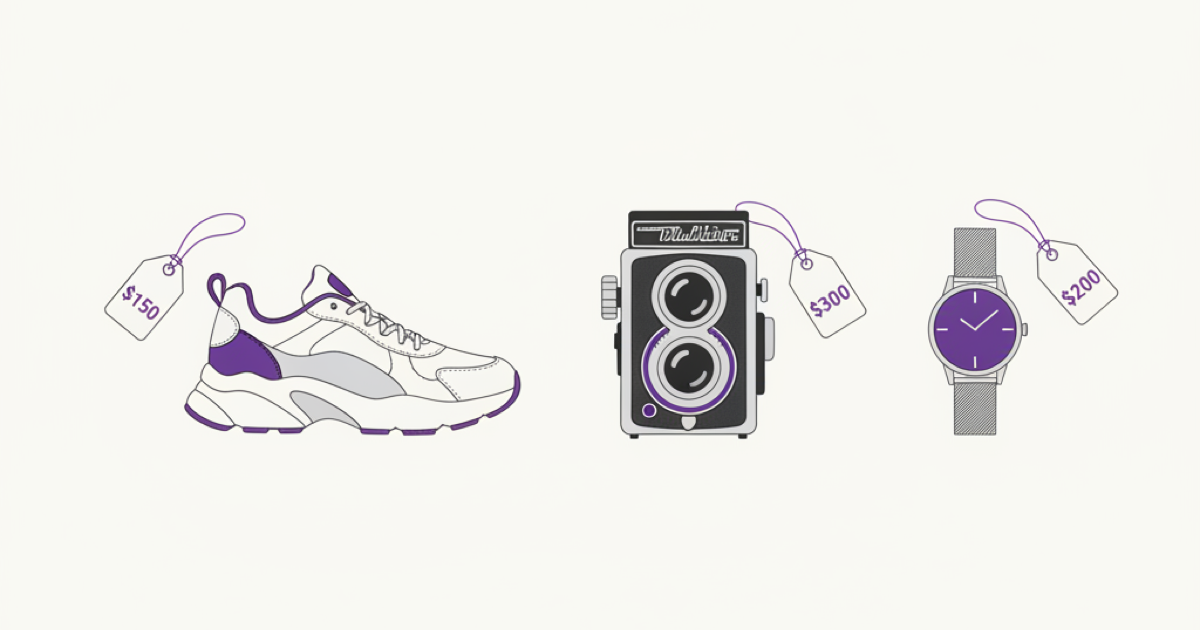
Reselling on eBay means buying items below market value, from thrift stores, clearance racks, liquidation lots, or online suppliers, and selling them on eBay for a profit. It works in 2026 because pre-owned and refurbished goods now make up over 40% of everything sold on the platform, and you can start with under $100 and items you already own.
That is the short version. The longer version is that most new resellers quit within three months, not because eBay reselling does not work, but because they buy the wrong inventory, misjudge fees, and price shipping wrong. This guide covers how the model actually works, the exact steps to start, what sells right now, and where experienced sellers source their inventory.
How Reselling on eBay Works
The mechanics are simple: source low, list accurately, sell higher, keep the difference after fees and shipping. Profit is set the moment you buy, not the moment you sell. If you pay $25 for an item that sells for $40, no listing trick will save that flip. If you pay $8 for the same item, almost nothing can ruin it.
Three numbers decide whether any item is worth reselling:
Sell-through rate. The percentage of listed items in that category that actually sell within 30 days. Check sold listings on eBay (filter: Sold Items) and compare against active listings. If 400 are listed and 40 sold last month, that is a 10% sell-through and your money will sit for months. Look for 50% or higher on anything you are new to.
Net margin after fees. eBay takes roughly 13-15% of the total sale (item price plus shipping) in most categories, plus $0.30-0.40 per order. Add your cost of goods, packaging, and shipping. Aim for 30-40% net margin as a floor. Run every candidate item through an eBay fee calculator before you buy it, not after. Buying first and calculating later is the single most common way new resellers lose money.
Average sale price. Items under $10 rarely justify the listing and shipping time unless you sell them in volume. The sweet spot for most part-time resellers is $20-80: high enough that fees and shipping do not eat the profit, low enough that items still sell weekly rather than quarterly.
There are two broad models. Traditional reselling means you own the inventory: thrift finds, clearance hauls, liquidation pallets. Dropshipping means you list first and buy from a supplier only after the sale. Both are legitimate on eBay, but dropshipping has specific rules about where you can source from, covered in the eBay dropshipping policy guide.
How to Start Step by Step
Here is the sequence that gets you from zero to consistent sales without expensive mistakes.
1. Set up your seller account properly. Use a real name and address, add a payout bank account, and set up a business policy for returns (30-day returns lift search placement and conversion). New accounts start with selling limits, typically around 10 items or $500 per month. That is fine. eBay raises limits automatically as you sell and ship on time.
2. Sell 10 things from your own home first. Old game consoles, unused kitchen gadgets, brand-name clothes, cables, books. This costs you nothing, builds feedback, teaches you the listing flow, and starts the clock on limit increases. Do not source inventory until you have shipped at least 10 orders.
3. Learn to read sold comps. Search the exact item, filter by Sold Items, and look at the last 90 days. Note the price range, how fast identical items sold, and what condition and photos the top results had. This 5-minute habit is the entire skill of reselling. Everything else is logistics.
4. Price shipping before you list. Weigh the item packed, not bare. A $6 shipping misquote on a $30 sale erases a third of your profit. Use a shipping calculator to compare USPS Ground Advantage, Priority, and UPS rates by weight and zone, then decide whether to charge for shipping or bake it into the price with free shipping. For items under 1 lb, calculated first-class-style rates almost always win.
5. Write titles for search, not for humans. Buyers find you through eBay search, and eBay search matches keywords. "Nike Air Max 270 Mens Size 11 Black White Running Shoes Sneakers" beats "Great Nikes, barely worn!" every time. Brand, model, size, color, key attribute, category noun. Use all 80 characters.
6. Photograph like the sold listings that win. Twelve photos are free, use at least eight: front, back, sides, sole or base, tags or labels, flaws close up, and a size or serial shot. Natural light, plain background. Photographing flaws honestly reduces returns more than any policy setting.
7. List daily, even if it is one item. eBay's algorithm favors active sellers. Five listings a day beats 35 listings every Sunday. Consistency also smooths your cash flow, since items listed steadily sell steadily.
8. Track everything from day one. Cost of goods, fees, shipping, mileage to the thrift store. Reselling income is taxable, and in the US you will receive a 1099-K once you cross the reporting threshold. A basic spreadsheet is enough to start; the sellers who skip this step regret it every April.
Best Things to Resell Right Now
These are the categories moving in 2026, based on current sold data and sell-through rates. The pattern across all of them: small, searchable, easy to prove authenticity, and expensive enough to justify the work.
Used electronics and accessories. The most reliable volume category on eBay, and electronics remains the platform's largest segment at roughly 16% of all listings. The unglamorous stuff wins: replacement remotes, laptop chargers, printer parts, camera batteries, cables for discontinued devices. Margins per item are modest, but sell-through is fast and sourcing is everywhere.
Game consoles and retro gaming. Working PS4s, Nintendo Switch consoles, GameCube controllers, and boxed retro games sell within days. Broken consoles sell too, listed honestly for parts or repair, and are often the better flip if you can source them near free.
Computer components. GPUs, CPUs, SSDs, and RAM hold value and ship cheap. A pulled graphics card from an office-liquidation desktop can be a $150-300 flip in a 1 lb box. Test everything and photograph the part number.
Branded sneakers. Nike, Jordan, New Balance, and adidas in wearable sizes are among the highest-margin flips on the platform. eBay's Authenticity Guarantee handles verification on sneakers over $100, which took most of the counterfeit risk off sellers. The tradeoff: sizing knowledge matters, and hype releases move faster than general releases.
Vintage and workwear clothing. Carhartt jackets, Patagonia fleece, vintage Levi's, Harley-Davidson tees, and 90s sportswear pull 60-80% margins when thrifted. Measure everything (pit to pit, length, inseam) and put the measurements in the listing; clothing returns are almost always about fit.
Trading cards and collectibles. Pokemon, sports cards, Magic: The Gathering, and graded slabs remain deep markets. This category rewards knowledge heavily and punishes guessing, so start with a niche you already understand.
Auto parts. Tail lights, side mirrors, OEM wheels, and infotainment units from salvage sources sell at strong margins because buyers are comparing against dealer prices. Fitment data (year, make, model) in the listing is mandatory, and eBay's parts compatibility tool does the heavy lifting.
Tools. Used DeWalt, Milwaukee, and Makita tools, even bare tools without batteries, sell fast year-round. Estate sales are the classic source.
Media with a twist. Common DVDs are dead, but box sets, out-of-print titles, textbooks, and manuals for machinery or appliances still sell. Scan barcodes with a pricing app before buying any media in bulk.
Best Brands and Categories for High Margins
If you only remember one list at the thrift store, make it this one. These brands consistently clear 50%+ net margins because their buyers search by brand name and pay for condition:
| Category | Brands to grab | Typical thrift-to-sold spread |
|---|---|---|
| Workwear | Carhartt, Dickies, Wrangler (vintage) | $6-10 buy, $35-80 sold |
| Outdoor | Patagonia, The North Face, Arc'teryx | $8-15 buy, $40-150 sold |
| Sneakers | Nike, Jordan, New Balance 990s, Asics | $10-25 buy, $50-200 sold |
| Denim | Vintage Levi's (501, 505), Lee, designer denim | $5-12 buy, $30-120 sold |
| Boots | Doc Martens, Red Wing, Timberland | $10-20 buy, $50-180 sold |
| Athleisure | Lululemon, Vuori, Alo | $6-12 buy, $30-90 sold |
| Kitchen | Le Creuset, All-Clad, vintage Pyrex | $5-20 buy, $40-200 sold |
| Electronics | Bose, Sony, Canon, Apple accessories | Varies, check comps |
Two warnings that save real money. First, condition gates everything: a stained Patagonia fleece is a $12 item, not a $60 item. Check cuffs, zippers, soles, and seams under store lighting before you buy. Second, some brands aggressively police intellectual property on eBay through the VeRO program, and listings that use a brand's stock photos or trademarked phrasing can get pulled even when the item is genuine. Use your own photos and factual titles, and keep a list of brands that have flagged sellers in your category.
High margin also hides in boring places. Appliance knobs, discontinued curtain hardware, replacement couch feet, and OEM vacuum attachments routinely sell at 5-10x cost because the buyer has no alternative. Nobody brags about flipping a dishwasher rack for $45, which is exactly why the niche stays profitable.
Where to Buy Items to Resell
Sourcing is the half of the business that happens before eBay ever sees the item. The main channels, roughly in order of margin versus effort:
Thrift stores and charity shops. Still the highest-margin source per item. Go often, go early, and learn two or three categories deeply rather than skimming everything. Weekday restock mornings beat weekends.
Garage, estate, and yard sales. Estate sales in particular are where tools, cameras, vintage electronics, and collectibles surface at prices set by people who want the house empty. Bundle offers work: "$20 for the whole box" is the native language of garage sales.
Retail arbitrage and clearance. Walmart, Target, TJ Maxx, Ross, and outlet clearance endcaps produce steady flips on toys, LEGO, small appliances, and discontinued items. Scan with the eBay app on the spot and only buy items with proven sold comps and 50%+ sell-through.
Liquidation and pallet suppliers. Sites selling customer returns by the pallet or case offer low per-unit costs with real variance in condition. Start with one small case lot, not a pallet, and assume 20-30% of returns inventory is unsellable when you model the numbers.
Facebook Marketplace, OfferUp, and local auctions. Cross-platform arbitrage, buying locally where prices are hyperlocal and selling on eBay where the whole country is bidding, works especially well for furniture-adjacent smalls, exercise gear, and electronics.
Online suppliers and dropshipping. If you want to scale past what your car can carry, wholesale and dropship suppliers like AliExpress, CJdropshipping, Banggood, and domestic wholesalers let you list hundreds of products without holding stock. Margins per unit are thinner than thrifting, but volume and repeatability are higher, and everything can be systemized. This is where software earns its keep: SuperDS bulk-imports listings from 20+ suppliers and monitors supplier price and stock changes automatically, which matters because a supplier price hike on an unmonitored listing turns a profitable sale into a loss overnight. Just source from actual wholesalers or retailers permitted under eBay's rules, not from other marketplaces in ways that violate the dropshipping policy linked above.
Your own network. Tell people you sell on eBay. Friends clearing garages, relatives downsizing, and local businesses dumping old stock become free or near-free inventory pipelines faster than you would expect.
Most successful resellers run two channels in parallel: one high-margin owned-inventory source (thrift or estate sales) for profit per item, and one scalable source (retail arbitrage or dropshipping) for consistent volume. Start with whichever fits the time you actually have, prove your numbers on 50 sales, then add the second channel.
The whole game reduces to a loop: source below market, verify the comps and fees before you pay, list accurately with strong photos, ship fast, repeat. Run that loop enough times and eBay reselling stops being a side hustle experiment and starts being a system.