
Scaling an eBay store in 2026 is no longer about speed. It is about control at scale.
Many sellers hit a growth ceiling not because demand disappears, but because listing errors multiply as volume increases. Manual listing introduces fatigue-based mistakes, while blind automation introduces silent ones.
Bulk listing sits between these extremes. When done correctly, it allows sellers to scale without losing accuracy, stability, or account safety.
Why Scaling Fails for Many eBay Sellers
Most scaling failures come from one of two traps. Some sellers list manually for too long. As volume grows, prices drift, stock gets misread, and item specifics become inconsistent.
Other sellers jump directly into full automation. Listings update without review, prices overwrite margin logic, and stock changes trigger cancellations. Both approaches fail for the same reason. They remove control at the wrong stage.
Bulk Listing vs. Automation Chaos
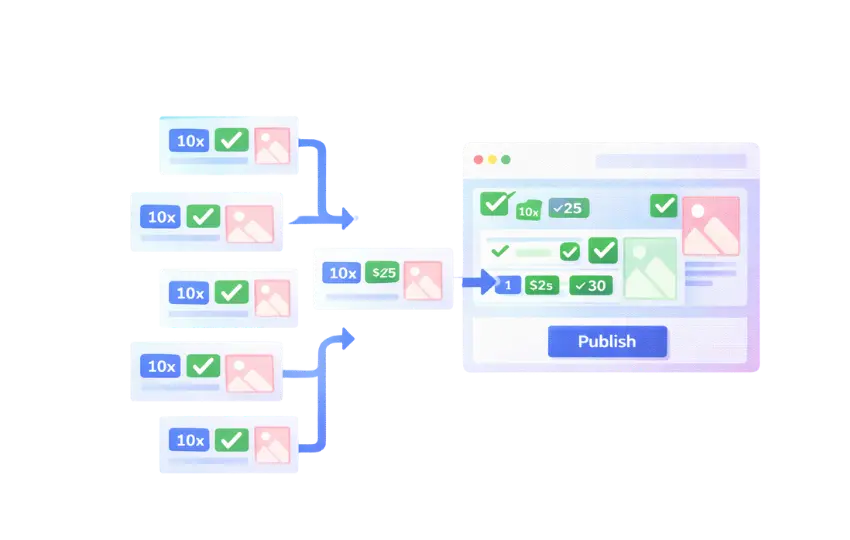
Bulk listing is not about publishing faster. It is about publishing correctly.
Instead of editing listings after they are live, bulk listing allows sellers to prepare, validate, and publish multiple listings in a controlled state. Errors are caught before they affect buyers, metrics, or margins.
This single difference is what makes bulk listing safer than blind automation.
The 6% Below Standard Trap Most Sellers Miss
Bulk listing magnifies both good and bad data.
If pricing or stock errors slip through at scale, sellers can quickly accumulate cancellations. Once those cancellations push performance into Below Standard, eBay applies an automatic additional 6% Final Value Fee on affected orders.
According to eBay’s official Seller Performance Standards, this penalty applies across transactions, not just individual listings. At scale, that extra 6% can erase margins fast.
Bulk listing is safe only when listings are validated before publishing.
Why Bulk Errors Are More Expensive After January 13, 2026
On January 13, 2026, eBay expanded Promoted Listings attribution to a 30-day window.
This means ad fees may apply long after the original click. If bulk-listed items contain pricing errors, sellers are no longer just losing margin. They are paying inflated ad fees on unprofitable orders weeks later.
This makes pricing accuracy at launch far more important than post-publish corrections. The eBay Promoted Listings update for 2026 explains how this change impacts profitability today.
Why Bulk Errors Are More Expensive After January 13, 2026
On January 13, 2026, eBay officially implemented the Expanded Halo Attribution model. This update fundamentally changed the financial risk of listing errors.
Previously, you only paid an ad fee if the specific buyer who clicked your ad bought the item. Under the 2026 rules, any click by any buyer tags your listing for 30 days. If anyone buys that item within that window (even through an organic search), you are charged the ad fee.
- The Risk of Post-Publish Corrections: If you bulk-list 100 items with a pricing error and wait "just a few hours" to fix them, those items may have already been clicked. Because of the 30-day window, you are now locked into paying inflated ad fees on those unprofitable orders for the next month.
- The Financial Trap: According to the official eBay Seller Announcement, ad spend is expected to increase as more sales are attributed to promotions. If your bulk data is inaccurate at launch, you aren't just losing margin—you are paying eBay a "visibility tax" on every mistake.
This makes accuracy at the time of launch far more important than post-publish corrections. By using a controlled bulk-listing workflow, you validate your profit buffers before the 30-day attribution clock starts ticking.
Bulk Listing Supports Listing Stability in 2026
In 2026, eBay rewards listing stability.
Listings that remain consistent perform better than listings that are frequently edited. Bulk listing supports this by reducing the need for constant post-launch changes.
Instead of reacting to errors after listings go live, sellers publish stable listings from the start. Stability compounds performance.
Why Bulk Listing Depends on Proper Order Syncing
Bulk listing only works when orders are handled correctly afterward.
If orders are not synced properly, sellers risk delayed tracking, fulfillment errors, or duplicate orders. Scaling safely requires structured order handling alongside listing control.
The Orders Sync Guide explains why accurate order syncing is the backbone of safe bulk operations.
Preventing Price and Stock Mismatches at Scale
At higher volumes, small pricing or stock mistakes have large consequences.
Bulk listing allows sellers to validate prices, margins, and stock assumptions before publishing. This prevents overselling, surprise losses, and cancellation spikes.
For a deeper breakdown of these risks, see How to Avoid Price and Stock Mismatches on eBay in 2026.
How SuperDS Bulk Lister Enables Safe Scaling
The Bulk Lister in SuperDS is built for controlled growth.
Sellers can prepare listings in batches, review critical details, and publish with confidence. The workflow reduces repetitive tasks without removing decision-making.
For additional safety, SuperDS operates without relying on risky API connections. The Non-API Lister provides reassurance for sellers scaling under strict account standards.
Bulk Listing Is a Control System, Not a Shortcut
Bulk listing does not replace good listing practices. It enforces them.
The safest eBay sellers in 2026 use bulk listing to apply consistent logic across many listings, not to bypass review. Control always comes before scale.
Conclusion
Scaling eBay in 2026 requires more than speed. It requires accuracy, stability, and awareness of how small errors compound at scale.
Bulk listing provides the safest path forward when combined with pricing validation, order syncing, and controlled publishing. When used correctly, it allows sellers to grow without falling into automation traps that quietly destroy margins and account health.