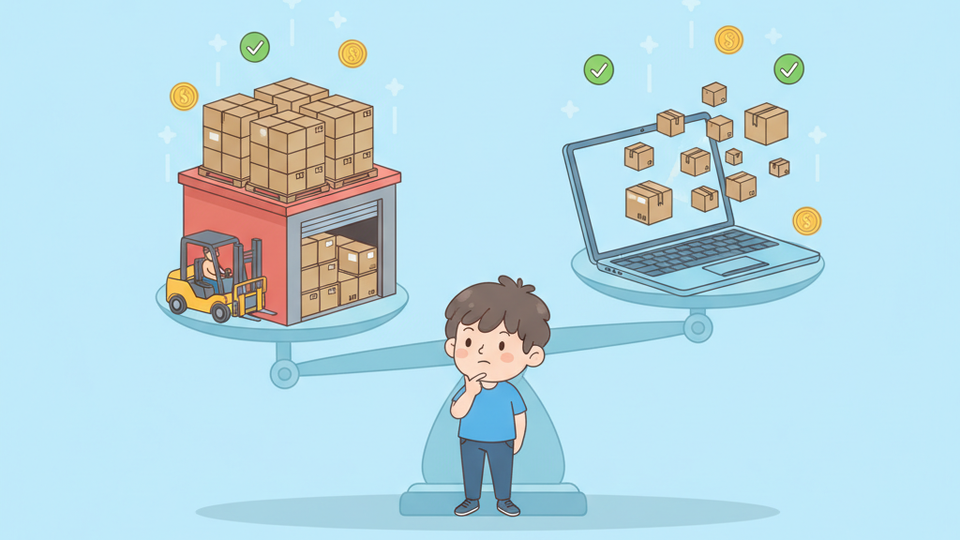
Amazon FBA and dropshipping are the two dominant ways to sell physical products online without running your own warehouse. With FBA you buy inventory upfront and Amazon stores and ships it; with dropshipping you list first and buy each unit from a supplier only after a customer pays you.
That single difference (inventory before sales versus after) drives everything else: capital requirements, margins, risk shape, and how fast you see your first profitable month. Here is the honest comparison for 2026. If you plan to sell Amazon products on eBay, read the Amazon to eBay dropshipping guide first.
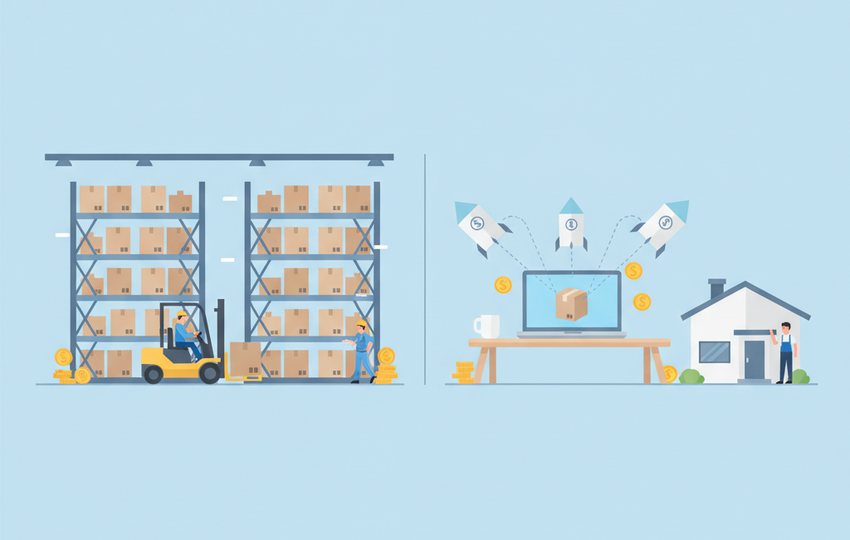
The Models Side by Side
| Factor | Amazon FBA | Dropshipping |
|---|---|---|
| Startup capital | $3,000-$10,000+ | Under $500 |
| Inventory risk | High, prepaid stock | None, buy after sale |
| Net margin per sale | 20-40% (private label) | 10-25% |
| Time to first sale | 2-4 months (sourcing, shipping in) | Days |
| Fulfillment quality | Amazon-grade, hands off | Depends on your suppliers |
| Platform dependence | Amazon account is the business | Spread across eBay, Shopify, suppliers |
| Scaling cost | Linear with inventory | Mostly software |
| Best at | Winning a proven product long-term | Testing many products fast |
Where FBA Wins
Margins on proven products. Once a private label product ranks and reviews accumulate, FBA compounds: Prime badge conversion, repeat purchases, and per-unit costs that drop with reorder volume.
Fulfillment you never think about. Amazon's logistics handle storage, delivery, returns, and customer service messages. Your delivery metrics are Amazon's problem.
A sellable asset. Established FBA brands sell for 2-4x annual profit. A dropshipping store is harder to exit because its value lives in operations rather than a brand.
Where Dropshipping Wins
Capital efficiency. You spend nothing on product until a customer has already paid you. A failed product costs you the time it took to list, not a pallet of unsold stock. The full cost picture is in our startup cost breakdown.
Speed to market. An FBA launch takes months of sourcing, inspection, and inbound shipping. A dropshipping product goes from idea to live listing in minutes, especially with one-click importing from suppliers like Amazon itself.
Testing breadth. FBA forces you to bet big on few products. Dropshipping lets you run hundreds of small experiments simultaneously and let sales data pick the winners. Tools like Products Finder shortcut this further by showing what already sells.
No storage bleed. FBA charges monthly storage, long-term storage penalties, and removal fees. Dead dropshipping listings cost nothing.
The Risks Each Model Hides
FBA's failure mode is capital loss. Choose wrong (or get undercut mid-season) and you own thousands of dollars of inventory plus storage fees while it depreciates. Amazon can also suspend listings or accounts with stock stranded in its warehouses. Reinstatement takes weeks.
Dropshipping's failure mode is account health. Your seller metrics depend on suppliers you do not control. A supplier who ships late or runs out of stock converts directly into defects, item not received cases, and eventually restricted accounts. This risk is manageable, but only with automation: price and stock monitoring to stop selling what cannot ship, and order sync to keep tracking flowing.
Both share platform risk. Policy shifts, fee increases, and algorithm changes hit either model. FBA concentrates that risk in one company; dropshipping spreads it across a marketplace and multiple suppliers.
A Decision Framework for 2026
Answer three questions:
- How much can you afford to lose completely? Under $1,000: dropshipping is the only sane entry. Over $5,000 and you can stomach losing it: FBA is on the table.
- Do you already know what sells? If you have validated demand data, FBA monetizes it best. If you are guessing, dropshipping is the cheapest way to stop guessing.
- What do you want in three years? A sellable brand points to FBA eventually. Cash flow with location and time freedom points to dropshipping, possibly across multiple platforms.
The strongest answer is often sequential: start with dropshipping to learn product selection with real stakes but small downside, then graduate proven winners into inventory positions. Sellers who skip the learning phase pay for their product education in unsold FBA stock.
Getting Started the Low-Risk Way
If dropshipping is your entry point, the setup that protects your account from day one looks like this:
- Pick a marketplace: eBay has the lowest barrier (our no-money eBay guide walks through it).
- Source from suppliers with dropshipping-friendly policies and realistic delivery windows.
- Validate products with sales data, not gut feel.
- Automate pricing, stock, and order tracking before you scale volume.
- Reinvest early profits into testing more products, and keep a shortlist of winners as future inventory candidates.
SuperDS covers step 2 through 4 in one platform: 15+ supplier integrations, data-backed product research, and hands-off order management. Start free, test fast, and let the sales data tell you whether FBA deserves your capital later.