Your supplier can make or break your dropshipping business. Pick the wrong one, and you are dealing with late shipments, angry customers, and eBay suspensions. Pick the right one, and fulfillment runs on autopilot while you focus on growing sales.
The problem? Most dropshippers skip supplier vetting entirely. They find a product with good margins, connect a supplier, and hope for the best. That approach works until it does not, usually around the time a customer opens a "not as described" case that tanks your seller metrics.
This guide gives you a systematic, repeatable process for evaluating any dropshipping supplier before you risk your store on them.
What Makes a Reliable Dropshipping Supplier?
A reliable supplier consistently delivers the right product, in acceptable condition, within the promised timeframe. That sounds simple, but fewer suppliers meet all three criteria than you might expect.
Here is what separates good suppliers from bad ones:
| Factor | Reliable Supplier | Risky Supplier |
|---|---|---|
| Response time | Under 12 hours | 48+ hours or no response |
| Shipping accuracy | 95%+ orders correct | Frequent wrong items |
| Stock updates | Real-time or daily | Manual, irregular updates |
| Return policy | Clear, written policy | Vague or no policy |
| Product photos | Match actual product | Heavily edited or stolen |
| Track record | Verified reviews, years in business | New account, no history |
According to eBay's seller performance standards, late shipment rates above 5% and defect rates above 2% can trigger account restrictions. Your supplier directly controls both of these metrics.
How Do You Vet a Supplier Before Your First Order?
Before placing a single listing, run every potential supplier through this evaluation process. It takes about 2-3 days per supplier, and that small investment prevents months of headaches.
Start with research, move to direct communication, then verify with a test order. Skipping any step creates blind spots that surface at the worst possible time.
The 8-Step Supplier Vetting Checklist
Step 1: Check Their Business History
Look for suppliers with at least 2 years of operation. On platforms like AliExpress, check the store age, transaction count, and seller rating. On Amazon, review the storefront age and feedback score.
A supplier with 10,000+ transactions and a 4.7+ rating has been stress-tested by real buyers. A supplier with 50 transactions and a 5.0 rating has not been tested at all.
Step 2: Test Communication Speed
Send a specific product question before you order anything. Something like: "Does this item come with the mounting hardware shown in photo 3?" or "What is the exact weight including packaging?"
Time their response. If they reply within 12 hours with a clear, specific answer, that is a green light. If they take 48+ hours or give a vague response, move on. Communication quality during the sales process is the best predictor of communication quality during problem resolution.
Step 3: Verify Product Photos Against Reality
Reverse image search the supplier's product photos using Google Images. If the exact same photos appear on dozens of other stores, the supplier likely grabbed them from a manufacturer's catalog. That is not automatically disqualifying, but it means the photos may not accurately represent what they actually ship.
Step 4: Place a Sample Order
Order 1-2 units yourself. Pay retail price. Do not ask for a sample discount, because you want to experience exactly what your customers will experience.
When the order arrives, evaluate:
- Shipping time (order date to delivery date)
- Packaging quality (will it survive transit without damage?)
- Product quality (does it match the listing photos and description?)
- Tracking accuracy (was tracking updated promptly?)
Step 5: Check Stock Consistency
Monitor the supplier's stock levels for at least one week. Check daily whether your target products remain in stock. If availability fluctuates wildly (in stock Monday, out Tuesday, back Wednesday), that supplier has inventory management problems.
Inconsistent stock leads to overselling, cancelled orders, and eBay defects. Tools like SuperDS Price & Stock Monitor automate this by checking supplier inventory every few hours and alerting you to changes before they cause problems.
Step 6: Review Their Return and Refund Policy
Ask the supplier directly: "If a customer receives a damaged item, what is your process?" Get the answer in writing.
Good suppliers offer one of these:
- Full refund without requiring a return (for low-cost items)
- Pre-paid return label to their warehouse
- Replacement shipment at no additional cost
Bad suppliers dodge the question, point to vague policy pages, or require the buyer to pay international return shipping. If returns are painful for you, they will be painful for your customers.
Step 7: Verify Pricing Stability
Check the supplier's pricing history over the past 30 days if tools allow it. Suppliers who frequently change prices without notice create margin problems. You list a product at $45 based on a $20 supplier cost, then wake up to find they raised the price to $35 overnight.
Price monitoring tools prevent this scenario. SuperDS's Price & Stock Monitor tracks supplier prices in real-time and can automatically adjust your eBay listings or pause them if margins drop below your threshold.
Step 8: Run a Small-Scale Live Test
After your sample order passes inspection, list 5-10 products from this supplier and fulfill real customer orders for 2 weeks. Track:
- Average shipping time to customers
- Customer complaint rate
- Order accuracy rate
- Communication responsiveness under real pressure
If the supplier maintains quality during this live test, you have a winner. Scale up gradually from there.
Red Flags That Signal a Bad Supplier
Some warning signs are obvious. Others only surface after you have committed. Here are the ones experienced dropshippers watch for:
No physical address listed. Legitimate suppliers have verifiable business addresses. No address often means a middleman reselling from another middleman.
Prices significantly below market rate. If a supplier offers products at 40-50% less than every competitor, something is wrong. They are either selling counterfeit goods, bait-and-switching with lower quality versions, or running an unsustainable model that will collapse.
Inconsistent product descriptions. If the title says "stainless steel" but the specifications list "alloy," the supplier is not paying attention to accuracy. That carelessness extends to fulfillment.
No branded packaging or invoicing options. Professional suppliers offer blind shipping (no supplier branding in the package). If a supplier refuses to remove their marketing materials from shipments, your customers will learn exactly where their product came from and may bypass you next time.
Requiring large minimum orders for dropshipping. True dropshipping suppliers ship individual units. If they require minimum orders of 50+ units, they are a wholesale supplier, not a dropshipping partner.
Should You Use One Supplier or Multiple?
Multiple suppliers, always. Relying on a single supplier is the dropshipping equivalent of putting all your money in one stock.
Here is why diversification matters:
Supply chain resilience. When your primary supplier runs out of stock on a best-seller, your backup supplier keeps orders flowing. Without a backup, you face cancelled orders and eBay defects.
Price leverage. When suppliers know you have alternatives, they are more motivated to keep prices competitive and service quality high.
Shipping speed optimization. Different suppliers ship faster to different regions. A US-based supplier handles domestic orders quickly, while an overseas supplier offers better prices for non-urgent shipments.
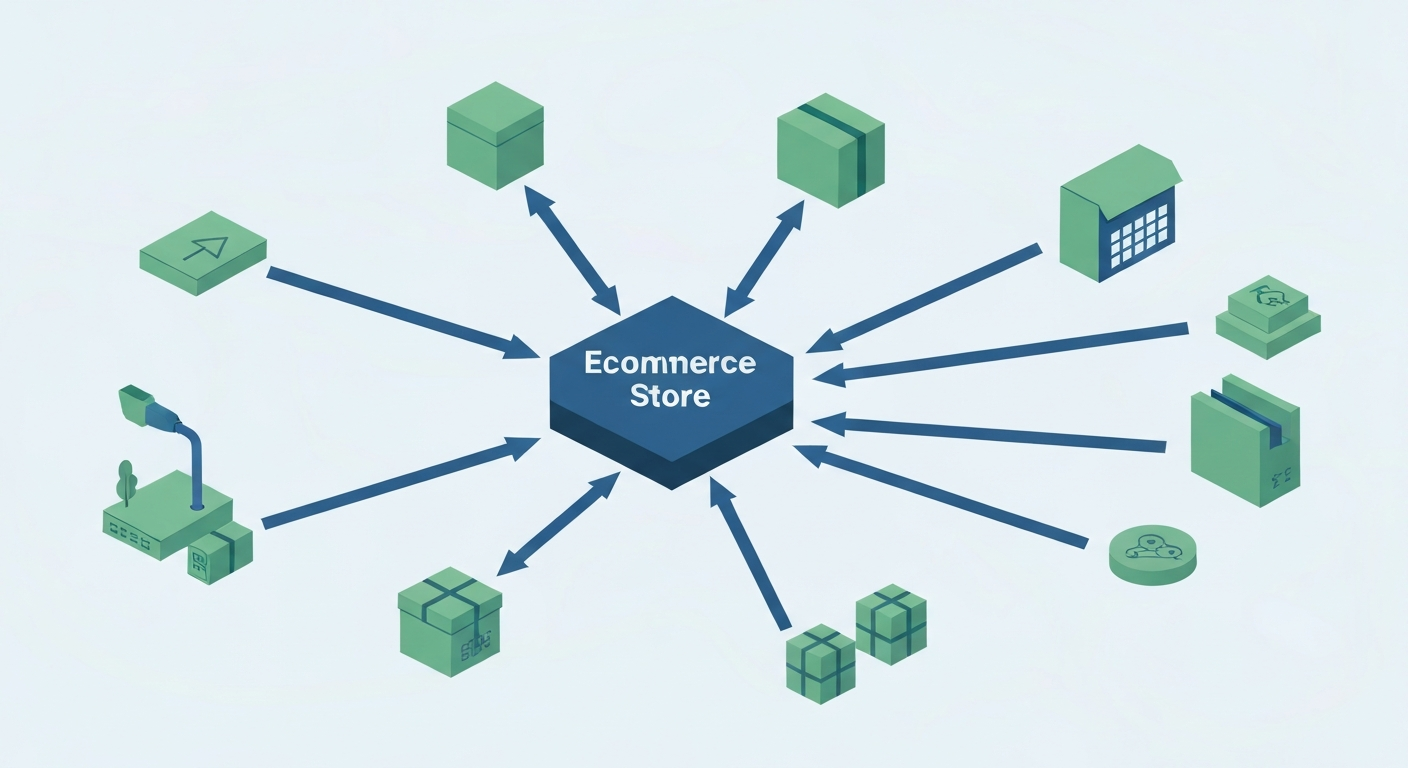
SuperDS connects you to 15+ verified suppliers including Amazon, AliExpress, Alibaba, Etsy, Temu, and more. Managing multiple suppliers from a single dashboard eliminates the complexity that normally comes with diversification.
How SuperDS Simplifies Supplier Management
Manually vetting and monitoring suppliers across multiple platforms is time-consuming. Here is how SuperDS streamlines the process:
Centralized supplier dashboard. Monitor pricing, stock levels, and fulfillment status across all 15+ supported suppliers from one screen. No more logging into five different platforms to check inventory.
Automated price and stock monitoring. SuperDS's monitoring tools check supplier prices and availability continuously. If a supplier raises prices or runs out of stock, your listings update automatically to prevent losses.
One-click product listing. Once you have vetted a supplier, SuperDS's 1-Click Lister lets you import products directly to your eBay store. No manual copying of titles, descriptions, or images.
VeRO protection built in. SuperDS's VeRO checker screens products against eBay's Verified Rights Owner Program before you list them. This prevents intellectual property strikes that can lead to permanent account suspension.
Quick Start: Your First Supplier Audit
Ready to put this checklist to work? Here is your action plan for this week:
- Pick 3 suppliers in your target niche from different platforms (e.g., one from Amazon, one from AliExpress, one from a specialty wholesaler)
- Send each a test question and start the communication timer
- Place a sample order from each supplier that responds within 12 hours
- Track delivery times and product quality for each sample
- Monitor stock levels for 7 days using SuperDS Price & Stock Monitor or manual daily checks
- Run a 2-week live test with the best-performing supplier (5-10 listings)
- Scale gradually once your live test confirms consistent quality
The entire process takes about 3 weeks from first contact to confident scaling. That is a small time investment compared to the months you would lose recovering from a bad supplier relationship.
Start your supplier evaluation with SuperDS and manage all your suppliers from one platform.